
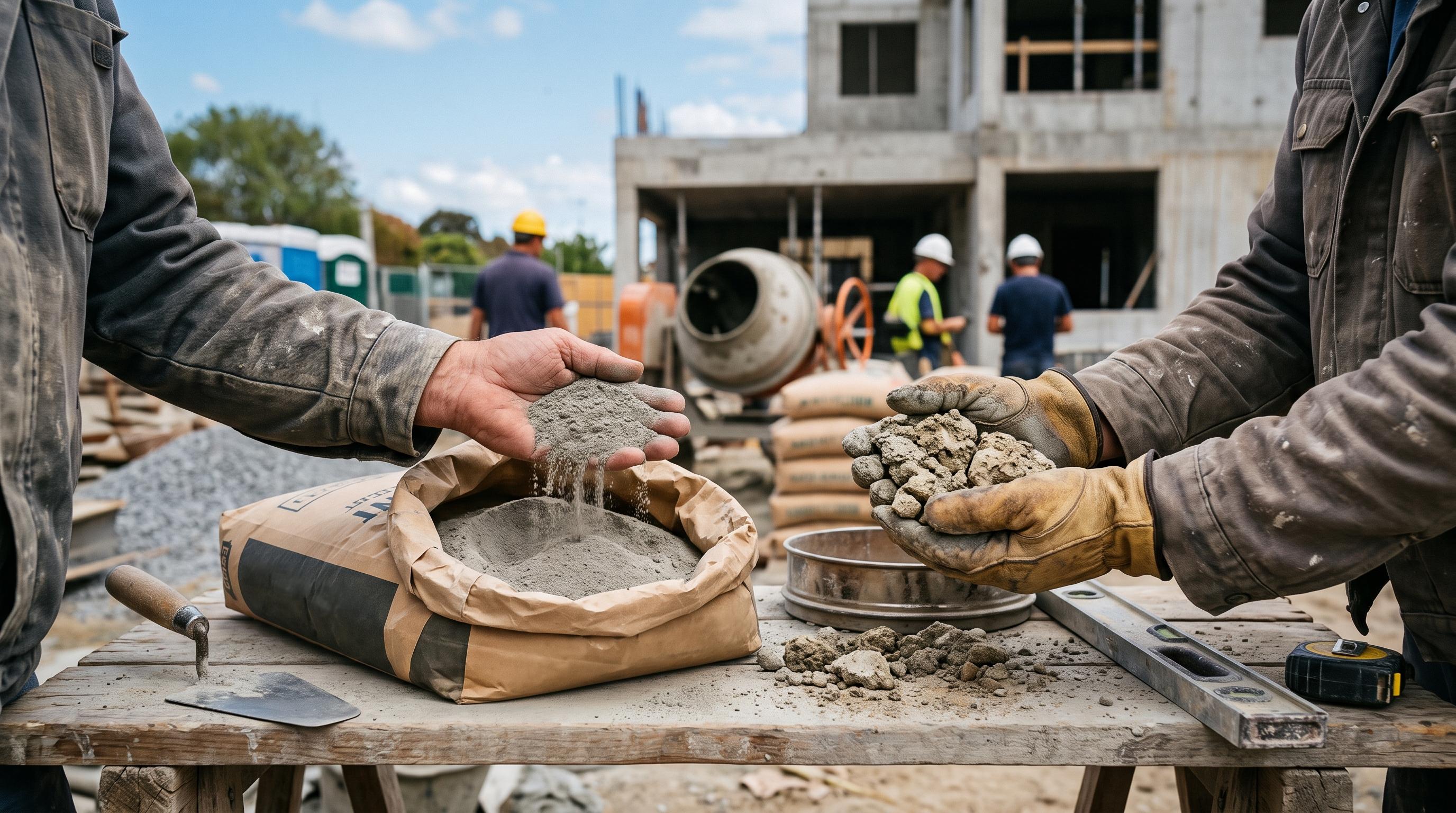
Cement is the one material on site where a bad batch is invisible until it is permanent. By the time a slab is dusting or a block wall is crumbling at the joints, the bag it came from is long gone. Four checks, none of which take more than a minute, catch most of it.
Match the grade to the job
Nigerian mills sell mainly two strength classes, and they are not interchangeable. 32.5N is a general-purpose cement — blockwork, plastering, screeds, mass fill. 42.5R gains strength faster and higher, which is what you want for structural concrete: columns, beams, suspended slabs, anything carrying load.
Using 32.5 in a column is a structural problem. Using 42.5 in plaster is only a money problem, but it is also a cracking problem — the richer mix shrinks harder.
Read the bag before you buy it
Bagging date. Cement loses strength in storage even when kept dry — noticeably after about three months. Ask for the newest pallet, not the one nearest the door.
Firmness. A good bag gives under your hand like a bag of flour. One that feels like a paving slab has already taken water.
Lumps. Squeeze any lump between finger and thumb. If it powders, it is loose packing. If it resists, that part of the bag has hydrated and will never gain full strength.
Seams and repacks. Original stitched seams, printed branding, no tape. Repackaged cement of unknown age and blend is the single most common way a site ends up with a weak batch.
Store it as though it will rain
Cement takes moisture from the air, not just from puddles. On a pallet or timber platform, at least 150mm clear of the ground and 300mm off external walls, stacked no more than ten bags high so the ones at the bottom are not compacted into a solid block. Cover with tarpaulin, and work oldest-first.
When in doubt, mix a test cube
If a delivery arrives and something feels wrong, cast one cube from it before it goes into anything structural. A day's delay costs a day. A weak column costs a floor.