Three numbers decide most roofing quotes: the profile, the gauge and the coating. Only one of them is usually discussed, and it is rarely the one that matters most.
Gauge is thickness, and thickness is dents
Aluminium long-span is commonly sold at 0.45mm, 0.55mm and thicker. The strength difference sounds marginal and behaves anything but: thinner sheets oil-can in the sun, dent under the feet of whoever services your water tank, and drum in heavy rain. For a residential roof with any foot traffic, 0.55mm is the sensible floor. Measure it — micrometers cost less than a bundle of sheets, and stated gauge and delivered gauge are not always the same conversation.
Coating decides where it can live
Plain aluminium handles coastal air well, which is why it dominates in Lagos and Port Harcourt.
Galvanised steel is cheaper per square metre and fails faster near salt.
Stone-coated steel buys appearance and rain noise reduction. It is heavier, so confirm the purlin spacing and timber size before ordering.
The parts that actually leak
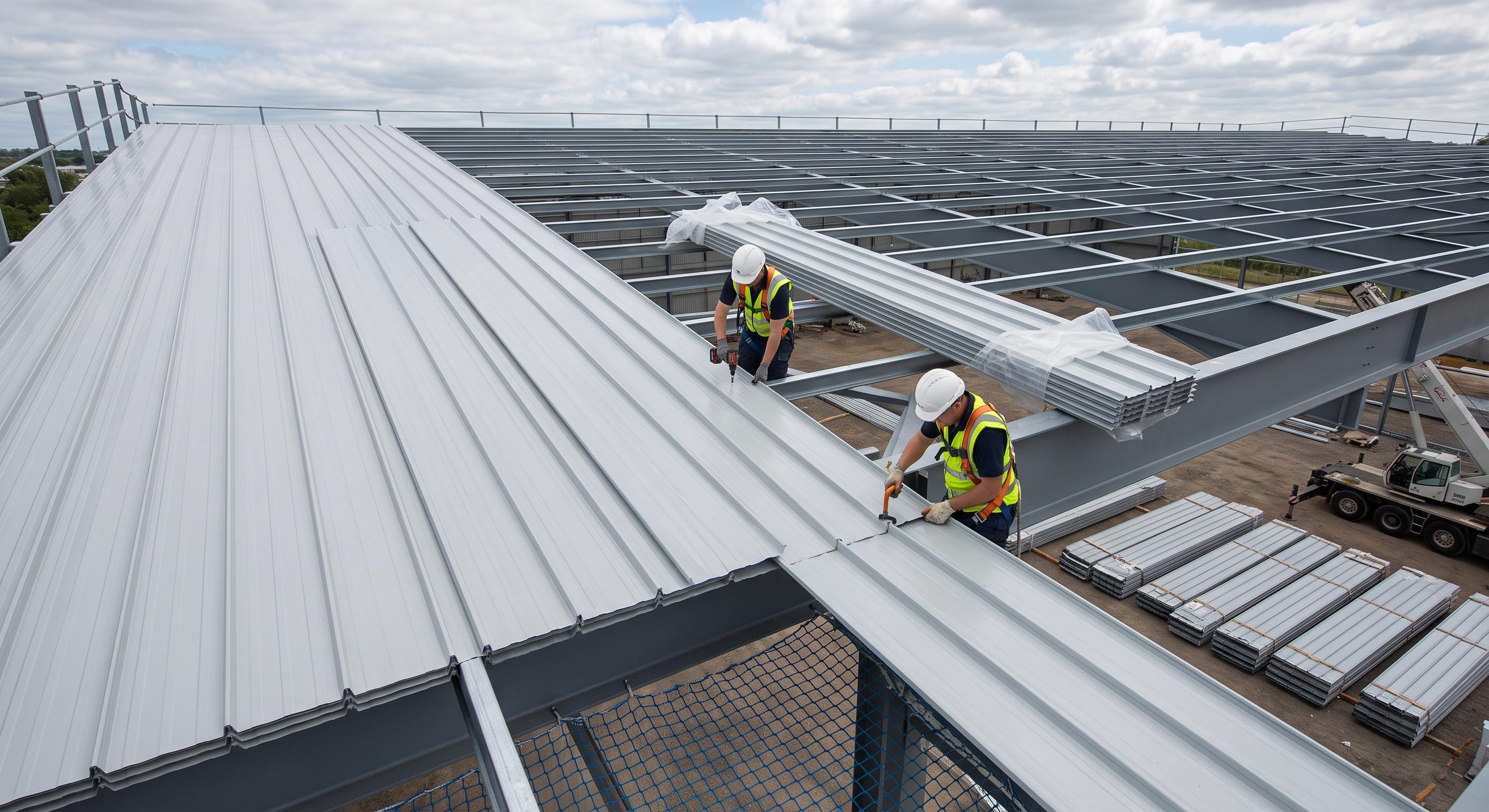
Sheets outlive their fixings. Specify self-drilling screws with bonded EPDM washers, not roofing nails — nails work loose as the roof expands and contracts through the day, and every loosened nail is a hole. Fix at the crown of the profile, never the valley.
Then check the details nobody quotes: end lap length, side lap direction against the prevailing wind, flashing at valleys and abutments, and whether the ridge cap is the same coating as the sheets. A roof of good sheets with mismatched flashing rusts at the ridge and stains everything below it.
Order once, with the offcuts counted
Long-span is cut to length, so a re-order is a new delivery run and often a new batch colour. Take the roof geometry to the supplier — spans, hips, valleys — rather than a square-metre figure, and have the cutting list confirmed in writing before production.